Strength & conditioning for business
Every team that keeps winning has the same thing behind it: a coach who installed a system and drilled it until it ran without him. In ninety days I install mine in your team. Then I grade it every quarter against a number off your own report, and tell you exactly what moved, what stalled, and who stepped up.
Two doors. One system underneath. Start where it's bleeding.
"My team is busy and nothing's moving."
The Playbook. Six sessions install how your team works, then a quarterly audit holds it to a number you already report. Leadership team first, department by department.
See the program and what it costs →"I've built it, and I'm running on empty."
F4. Four pillars, scored, with a monthly review that tells you which one is carrying the rest, and what it's costing you that it has to.
Take the F4 assessment →Inside The Cave™
The daily check-in, the weekly half-time report and the record, as they look inside The Cave™ today.
Your guide wrote the book, F4: The High Achiever's Handbook. Get it on Amazon →
What Brave Cave is
Nobody hires a strength coach because they're broken. They hire one because they're already good and they intend to go further, and because someone has to build the program, watch the numbers, and say the honest thing about what isn't moving. Your company is the gym. You're both in training.
David Wible · founder, Brave Cave
The frameworks scale all the way down. At this size it's the operator's track, so start with F4.
Where every engagement begins, whatever the company's size. Six sessions, one room.
Its own game plan, its own number off its own report, audited on the same quarter.
Department by department, leadership first. Headcount is a number, not a different program.
What you'll be able to prove
Not "your team will feel more aligned." These are things you point at in a quarterly review, because the system produces them as a by-product of running.
How many depends on your team and where you start. The point is it's counted on your own calendar, quarter over quarter, not a number I put on a slide.
Named people move manage → lead → empower, each with the date they moved and the evidence that earned it.
Your own monthly report, trended quarter over quarter. Revenue or cost, never a vanity metric.
The same roster read down by manager instead of across by person. Almost nobody measures this.
One capture system; every item with an owner, a due date and a level. A card per process, with a review date and a staleness flag.
The mechanism is the same every time: put what the leader assumes next to what the team actually does, and let the difference do the talking. Nobody argues with their own data.
Straight from The Cave™
The same roster, read down by who develops people, not across by title.
Almost nobody measures a manager this way. It’s the number on the scoreboard above, made visible.
Where the two scores split is the whole conversation.
Scored fresh every thirty days, by both people. The gap gets talked about. It doesn’t get buried.
The system
Everything here is a named tool with a defined output. That's deliberate: you can hand a framework to someone and they can run it without you. You can't hand them a philosophy.
Six questions, answered privately, read aloud. A permanent page on every person, including how they take hard feedback and how they give it.
Three levels of delegation. Everyone knows which one they're operating at, and exactly what earns the next.
What your people bring you once they're leading: a decision to approve, not a question to answer.
A living process, kept in The Cave™: purpose, steps, how it evolves, its metrics, an owner and a review date. Processes stop living in one person's head.
Clear, actionable, relevant: three tests a goal has to pass all of. Most fail actionable: they wait on someone else moving first.
Where you stand, the one number, the gap, the moves. One page a quarter, built off a report you already produce.
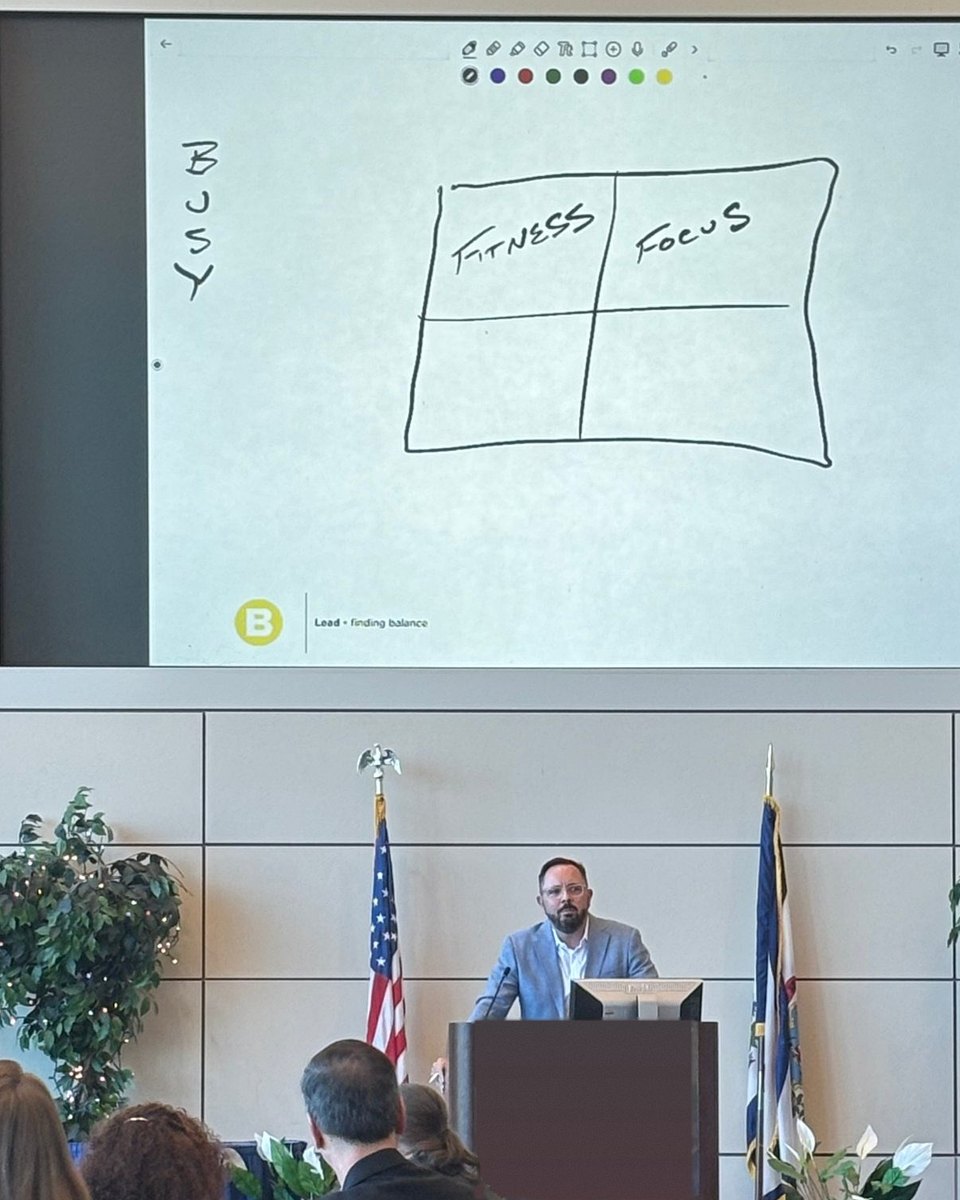
Fitness, focus, fraternity, finance: the four things an operator's performance actually rests on, scored so you can see which is slipping.
Mindset, ability, performance. Scored every thirty days by you and by the person you answer to. The gap is the conversation.
Every framework has a place it lives, a cadence it runs on, and a number it produces. That's what makes the quarterly audit possible.
The program
Six sessions, an hour each, six people to a room, starting with your leadership team. It installs the frameworks, and then it doesn't go away. Every month you send a number. Every quarter I grade what happened and cut the next plan.
That last part is the product. A framework gives you a meeting. This gives you an audit against your own results, every quarter, for as long as it runs.
Where it runs
A framework gives you a session every ninety days. A peer group gives you a good day once a month. Every framework here has somewhere it lives and a cadence it runs on, which is the whole reason a quarterly audit is possible at all. It runs while nobody's in a session.
The team book, the delegation roster, the process register, the quarter's game plan, and one page anyone opens to find out how things work here.
The weekly rhythm, the monthly M.A.P., and the line of sight from where you're going down to what you're doing today.
Your own numbers, read every month, so the quarterly starts with evidence instead of impressions.
Straight off the report you already run, not a metric we invented.
One page a quarter. Where you stand, the number, the gap, the moves, and who owns each, at what level.
For the operator
Nobody calls an athlete's recovery program soft. It's the professional half, the part that lets them keep performing at the level they've already reached. Four pillars, scored, reviewed every thirty days against the same M.A.P. your team runs.
The physical base. When it goes, focus goes, then performance. The center, not the reward.
The disconnect: stillness, chair time, deep thought, less phone. This is recovery, and skipping it costs what skipping recovery costs an athlete.
The people around you, and whether any of them will tell you the truth.
The money. Not just what you earn, but whether it's buying the life you said it would.
Worth saying plainly
You're surrounded by people who report to you, sell to you, or want something from you. The honest feedback stopped somewhere along the way and nobody announced it. That's not a character flaw. It's structural, and it happens to everyone who becomes the person others rely on.
A strength coach doesn't hand you a program and disappear. I install the frameworks, hold the operation to them every quarter against your own numbers, and do exactly the same to you.
In their words
Ashok Aggarwal
Jeannette Sermak-Proulx
Ben Berry
Cristy Cali
How it starts
Why you're looking at this now, and what you want to be true of your team in ninety days. Comes straight to me. No sequence, no newsletter, no scheduling link.
I'll tell you honestly whether this fits. Sometimes it doesn't, and I'd rather say so than take the engagement.
Six sessions, in a day or spread across a few weeks, whatever your calendar can hold. Departments come after, when you're ready.
Your own numbers, what moved, what didn't, who advanced. Then we cut the next quarter, and that step is the one that changes a company.
Two doors, one system
You'll end up doing both. So start with whichever is louder today.
Not ready yet?
David writes occasionally, about operating, deciding, and performing at a high level without losing yourself. No cadence. Just when it's worth saying.
Unsubscribe whenever.
You're on the list. Talk soon.
That didn't go through. Please try again in a moment.